Creator Series: Inside Mingteriors with Nolan Kurtz
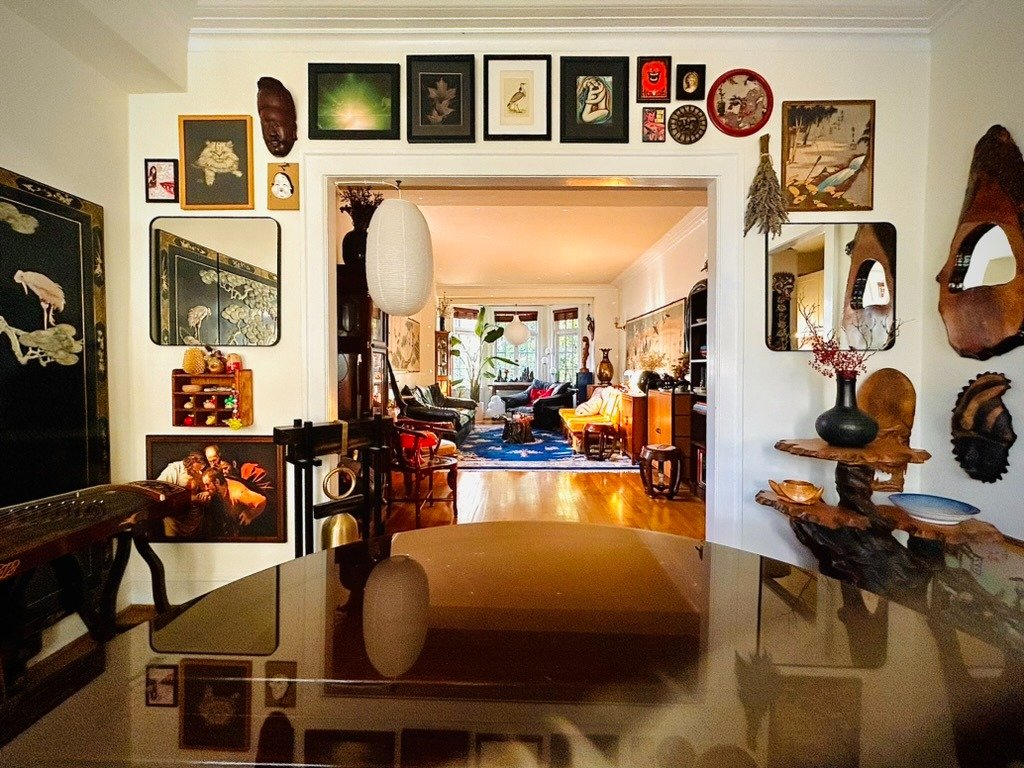
Welcome back to another installment of our Creator Series, where we step inside the homes and minds of creatives who remind us that interior design is never just about aesthetics—it’s about memory, identity, and the quiet ways we learn how to live with ourselves. In this feature, we’re honored to share the story of Nolan Kurtz, the voice and vision behind Mingteriors, whose Portland home feels less like a styled set and more like a living, breathing sanctuary.
Before We Begin: Who Is Nolan Kurtz?
Nolan was born in Bend, Oregon and raised in the suburbs of Tacoma, Washington. After years away, he returned to Oregon three years ago and now lives in a downtown Portland condo—a space that has become both creative outlet and spiritual refuge.
Professionally, Nolan’s background is rooted in mental health and spiritual care. He holds degrees from Duke Divinity School and the UNC–Chapel Hill School of Social Work, with specialized training in end-of-life care, geriatrics, and psychotherapy. He completed a chaplain residency at Stanford Hospital, where he supported patients, families, and staff across psychiatric units, neuro-ICUs, and COVID wards. Today, he’s stepped back from chaplaincy and spends his time balancing restaurant work with content creation.
Outside of work, Nolan’s interests are as layered as his interiors. He practices weightlifting and contemplative prayer, tattooing in his free time, and approaches creativity with the same attentiveness he once brought to clinical care. Life, in his shoes, looks intentional—grounded in reflection, ritual, and the steady building of beauty.
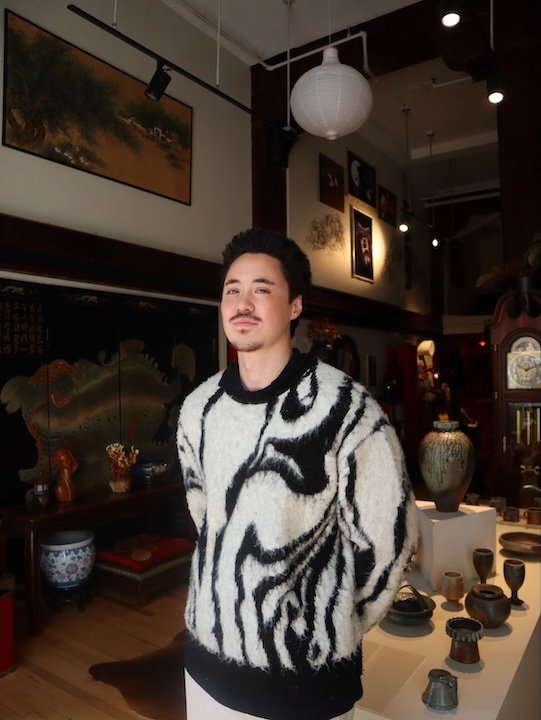
Photo by Lauren Lesueur
Designing as Healing: The Journey Home
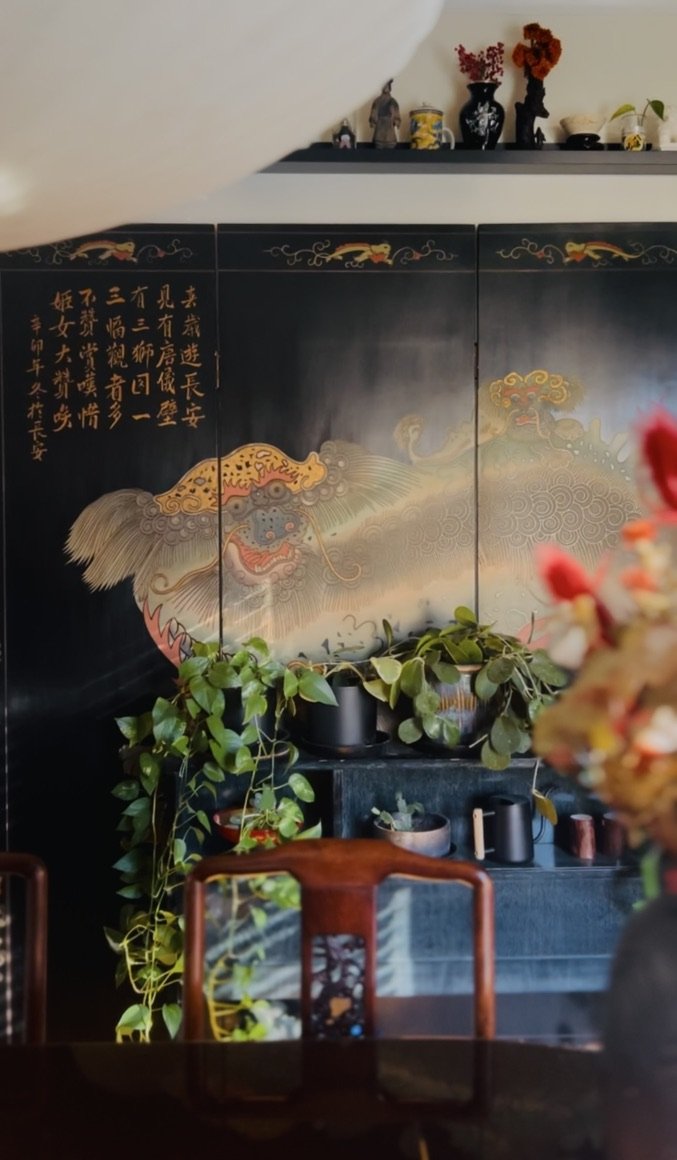
Nolan’s relationship with his home began not as a hobby, but as a response to loss. “In the aftermath of a series of devastations, including the death of my beloved grandfather, I found an unexpected source of healing through interior design.” After his grandfather’s passing and the sale of his grandparents’ home, Nolan inherited several family heirlooms—vintage Chinese furniture and art—that quietly reshaped his relationship with space. What started as casual curiosity deepened into something profoundly intentional.
“As I began learning the principles of fengshui, I discovered just how deeply the arrangement of a home can help foster spiritual and emotional wellbeing by cultivating a sense of safety and flow.”
Grief, Nolan explains, rearranges everything. Designing his home became a way to regain agency—to build something steady when so much felt unstable. “I wasn’t just decorating, I was building a refuge to manifest the kind of liberation, beauty, and abundance I desired for my life.”
Initially, his space leaned minimalist. Sparse, quiet, and open—but ultimately hollow. “While it felt spacious, it ultimately felt empty, which only reinforced the loneliness I felt living in a new city all by myself.” Long walks through downtown Portland led him into bookstores, where titles like Old Brand New by Dabito cracked something open. Bold color, playful maximalism, and joyful irreverence shifted his design philosophy entirely.
“Ever since, my approach to interior design has been rooted in play…the grown-up echo of the forts I built as a child.” Maximalism became less about excess and more about abundance—the kind that feels warm, welcoming, and alive.
Mingteriors: Becoming a Content Creator
Like many creators, Nolan doubted whether his space belonged online. It didn’t follow a consistent color palette. It wasn’t polished or overtly luxurious. But that uncertainty became the very reason he shared it.
“A few friends encouraged me to start an Instagram. At first, I was hesitant … I decided to share it anyway—not with the intention of gaining followers, but out of a genuine desire to connect with like-minded designers and to learn alongside them.”
His inspiration is deliberately eclectic. Nolan draws from the lived-in warmth of Ghibli interiors, the maximalist energy of Joshua Charow’s lofts, and the expressive layering of Jacob Collier’s personal style. Punk irreverence from Rick Owens’ interiors collides with the spiritual gravity of Orthodox churches, the liberatory beauty of Alok’s gender nonconformity, and the quiet brilliance of everyday homes shared across his feed.
In a perfect world, Nolan imagines Mingteriors as a space that balances visibility with integrity. He’s drawn to collaboration and creative sustainability, but remains mindful of critiques like those of Jaron Lanier, who frame social platforms as systems designed to monetize desire.
Let’s Talk About the Home
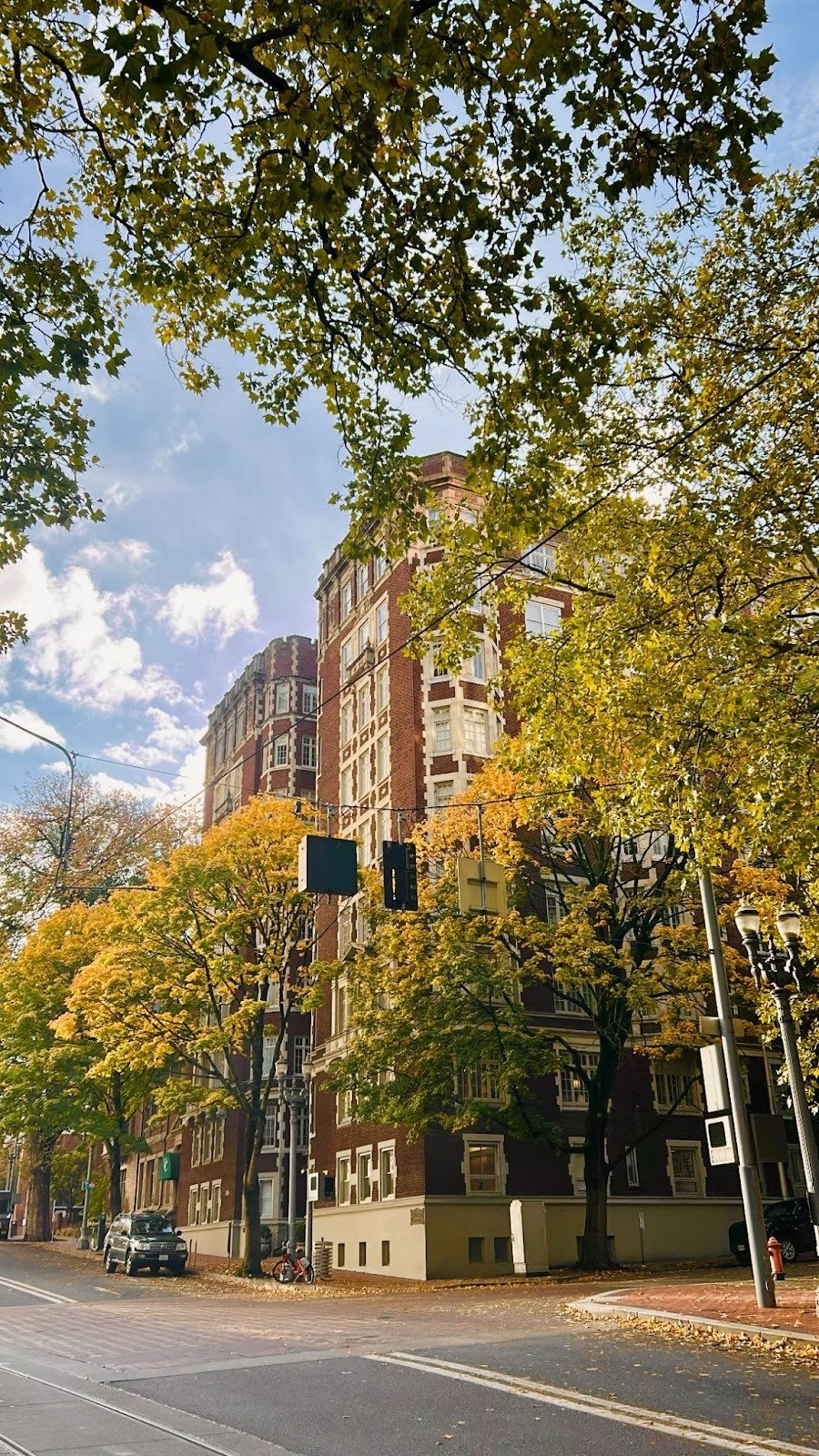
Nolan lives in The Ambassador, one of Portland’s oldest apartment buildings. Designed by Carl L. Linde in 1923, the nine-story Jacobean Revival high-rise features Columbian brick, sandstone trim, coffered ceilings, and a crenelated parapet that gives it a castle-like silhouette. His condo spans 1,414 square feet—a historic shell filled with deeply personal meaning.
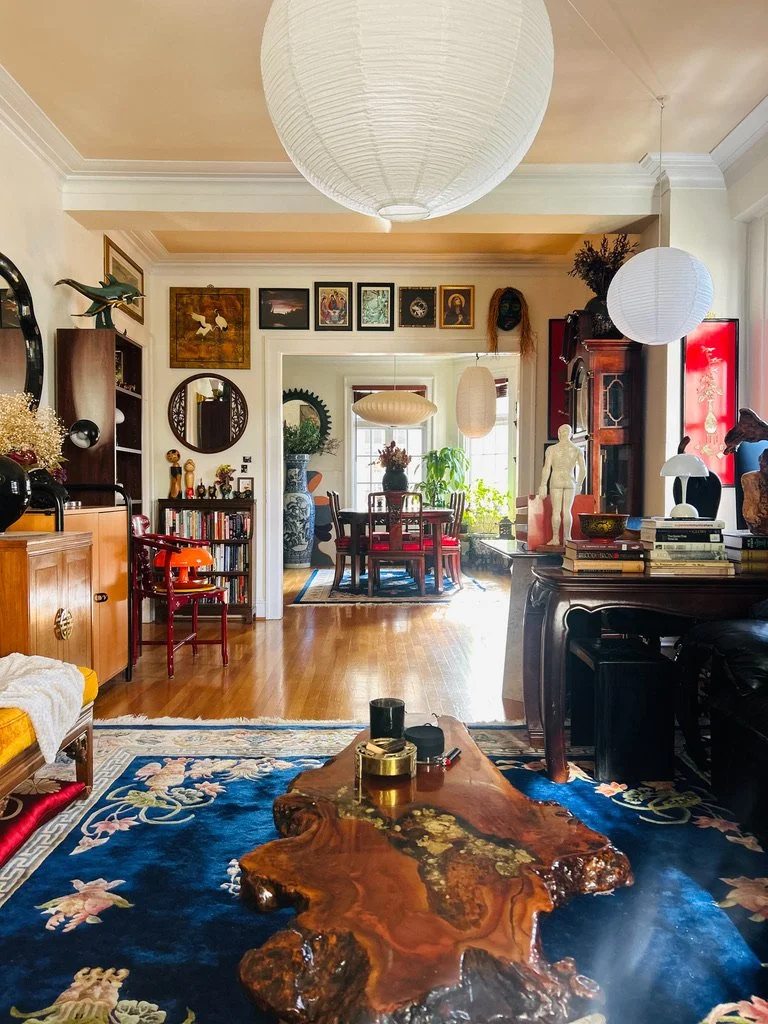
“I’m drawn to the elegance of traditional Chinese artistry and the childlike transgression of maximalism.” Nolan describes his aesthetic as ornate yet playful, elevated but deeply approachable. His home blends family heirlooms with secondhand finds, creating a space that feels welcoming and creatively expansive.
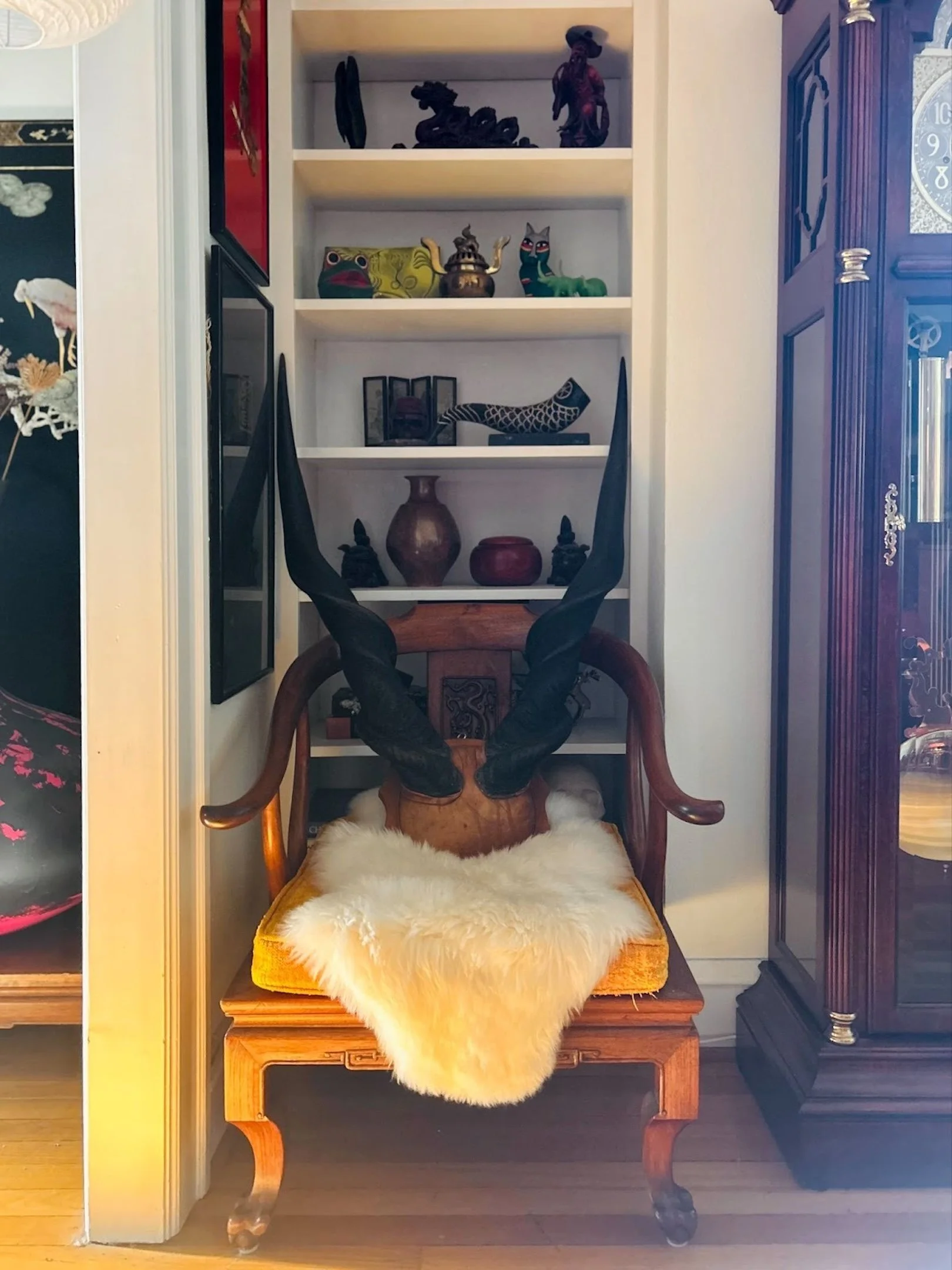
Among his most cherished pieces are works by Taiwanese carpenter Scott Chan, whose furniture fuses mid-century modern restraint with traditional Chinese drama. A decorative chair with buffalo horn–style armrests holds a set of ethically sourced eland horns—an object that feels ceremonial, grounded, and quietly powerful.
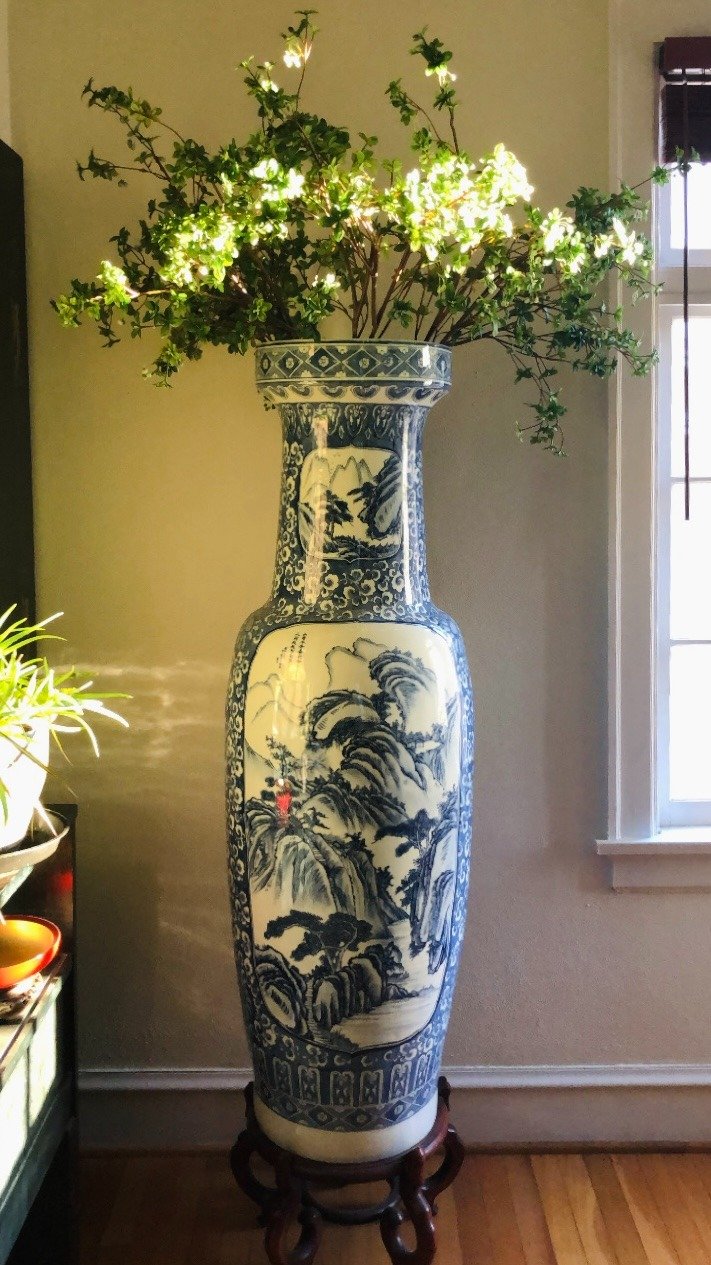
Perhaps the most sentimental piece is a hand-painted Chinese porcelain floor vase passed down from his maternal grandparents. Rendered in rich cobalt blue, it depicts a serene mountain landscape dotted with homes and clouds. “Heirlooms like this remind me of my family’s excellence, my grandparents’ perseverance as immigrants, and their boundless generosity.”
The Home, Evolving
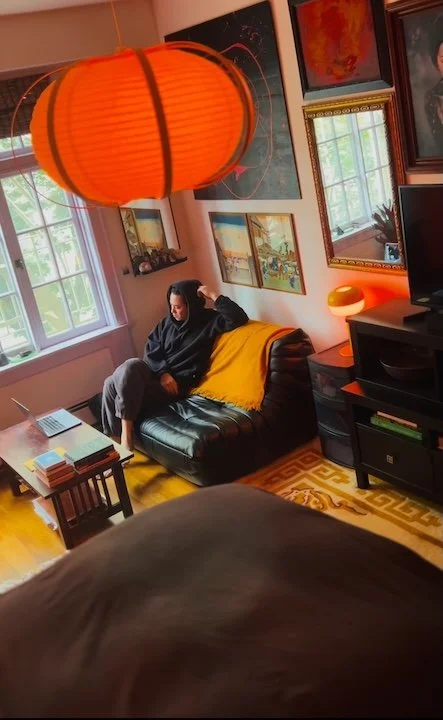
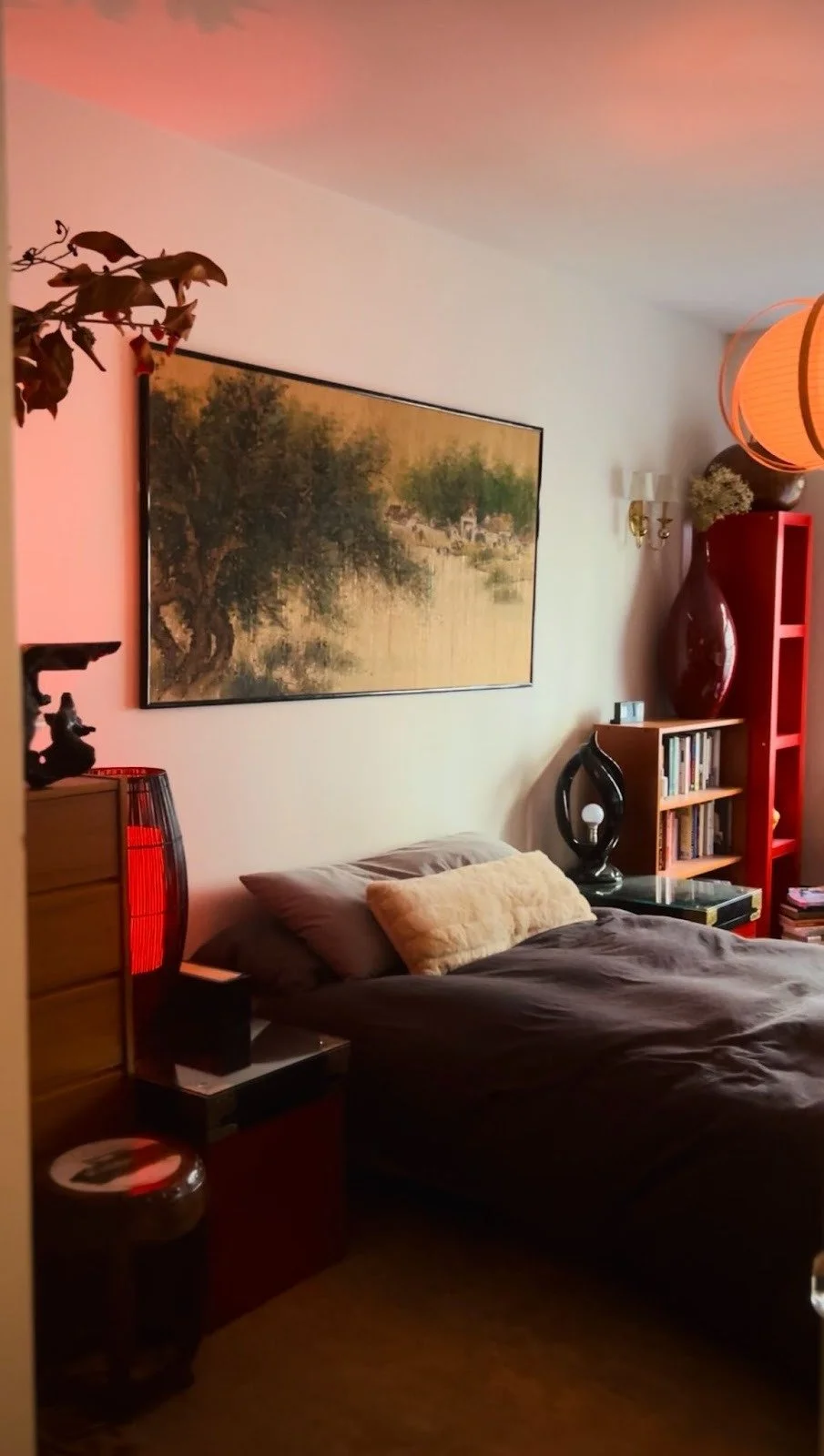
Nolan is currently immersed in three ongoing projects. The first is a bold reimagining of his bedroom gallery wall—bigger, denser, and unapologetically maximalist. The second transforms a former guest room into a home gym, complete with a squat rack and thoughtful decor that honors the room’s new purpose. The third introduces a projector into the living room, opening the door to slower evenings and shared rituals.
Each project reflects his belief that a home is never finished—it grows alongside us.
Chinese Eclecticism as Identity
“Interior design is one of the ways I choose to express my ethnic heritage.”
As a biracial Chinese American, Nolan uses design as a language of self-understanding. His version of Chinese eclecticism blends traditional artistry with playful maximalism, creating a sense of enclosure and safety that feels deeply personal. “I want my home to feel like stepping inside of my brain.”
Interreligious iconography, books on gender and sexuality, and live-edge woodwork coexist intentionally—each object pointing toward liberation, pluralism, and care for all creation.
Advice to You
“Don’t underestimate the value of thrifting!”
For those beginning their home decor journey, Nolan encourages patience and curiosity. Thrifting, he says, is not just economical—it’s an act of discovery. “One day, you’ll stumble upon something unexpected, and it’ll be the perfect new addition to your space.”
For aspiring creators, his advice is simple but profound: start. Perfection is overrated and authenticity builds connection. “While content creation in the world of interior design is a proclamation of individuality, it also reinforces the fact that none of us is the main character.”
Stay humble. Stay grateful. Lead with curiosity. Build community. Because in the end, a home—like a life—is not about having more, but about making meaning.